External conditions impact Port of Antwerp-Bruges’ quarterly results

Weather, strikes and geopolitics weigh on volumes, with recovery in March and continued investments in the future
In the first quarter of 2026, Port of Antwerp‑Bruges handled 65.5 million tons of maritime cargo, a decrease of 3.2% compared to the same period last year. After a weak start in January and February, throughput recovered in March. General cargo (-4.4%) – in particular containers and conventional general cargo – was under pressure, while bulk cargo remained stable (-0.6%) and RoRo traffic increased. The results reflect a complex combination of factors, including adverse weather conditions, social actions, geopolitical tensions and a weakened European industrial base.
Weaker start for container traffic
In the first quarter of 2026, container throughput decreased by 5.5% in tons and 2.6% in TEU compared to the same period last year. This should be seen against the backdrop of a relatively strong start to 2025, when the restructuring of container alliances generated high inbound volumes, as well as the weakened export position of Western Europe.
In addition, the start of the year was marked by extreme weather conditions. A snowstorm and prolonged cold spell in January, followed by severe storms in the Bay of Biscay until mid‑February, disrupted shipping and terminal operations. A four‑day strike against pension reform also had a significant impact. The interruption of the nautical chain led to the diversion of several vessels to other ports and to planned call-sizes that could only be partially handled due to a lack of spare terminal capacity.
Overall, an estimated 100,000 TEU (approximately 1.1 million ton) of container throughput was lost. From mid‑February onwards, and particularly in March, volumes recovered, once again highlighting the need for additional container handling capacity.
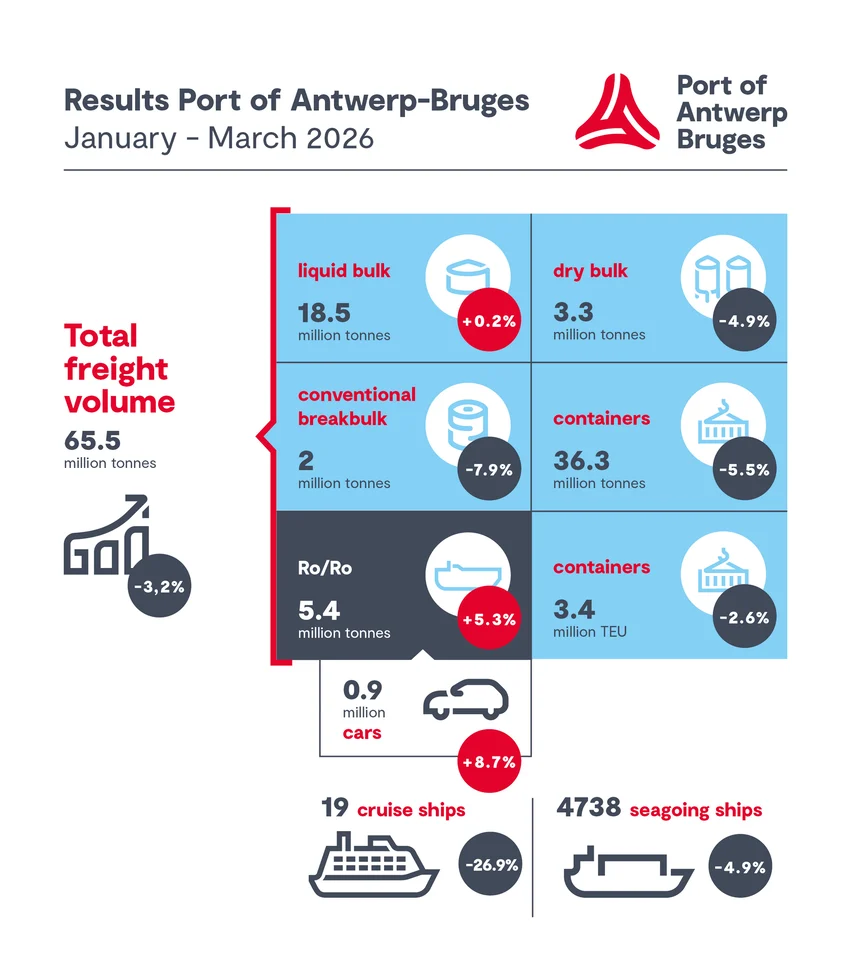
Quarterly figures Q1 2026
First impact of the Middle East conflict
The direct impact of the conflict in the Middle East remained limited in the first quarter due to longer sailing times via the Cape of Good Hope. The decline in imports from and exports to and from the Persian Gulf, of respectively 12% and 49%, during this period can largely be attributed to weather‑related disruptions.
From the end of March onwards, however, the first effects became visible. On 23 March, the last LNG tanker so far from Qatar arrived in Zeebrugge, and container lines adjusted their sailing schedules towards alternative ports in the Middle East and the eastern Mediterranean.
At present, the most significant impact of the conflict and the blockade of the Strait of Hormuz is indirect, through rising energy and fuel prices. These increased bunker and transport costs and further weaken the competitiveness of European industry. At the same time, low European gas storage levels – which will need to be replenished ahead of next winter – and disruptions in supply chains for certain products are creating additional
“The developments of this quarter underline the crucial importance of the port for the economic strength of our region and of Europe as a whole. From Zeebrugge, we play a key role in energy supply, logistics and industrial activities. Investments in infrastructure, innovation and sustainable projects not only generate additional traffic, but also jobs and economic growth. In this way, we continue to build a strong, future‑proof port that contributes to broad‑based prosperity.”


Related Post


Hitachi Construction Machinery (Europe) and Akkodis...
Hitachi Construction Machinery Europe N.V. (HCME), currently transitioning to the LANDCROS brand, today announced a strategic partnership wi...

Successful commissioning of petcoke silo at...
Following the successful start-up of the Delayed Coker Unit at the Rijeka Refinery in Croatia, we are pleased to announce the successful com...

A new digital experience: Discover the...
We are excited to announce the launch of our brand-new E-Crane website! With a fresh design, improved navigation and a stronger focus on use...

Leave us a comment
logged inYou must be to post a comment.