Connected machines and minds

From intelligent assistance systems that make earthmoving safer and more efficient to interdisciplinary teams shaping our next generation of digital solutions — construction technology is evolving fast. In edition 7, we take you inside today’s smarter jobsites and behind the scenes at the Liebherr Digital Development Center where software, data and engineering come together.
Smarter machines on the job site: advancing assistance systems in earthmoving
Automation is a frequent topic in construction. What receives less attention is what already works reliably on jobsites today. Assistance systems are part of that reality.
Construction sites are evolving fast. Machines are more connected, digital tools are part of daily operations, and operators handle increasing complexity while maintaining safety and productivity.
But how does this change play out in practice?
To answer that, we spoke with Eugen Schobesberger, managing director engineering and Joachim Strobel, managing director sales, at Liebherr-EMtec GmbH. Their perspective is clear. Technology must deliver measurable value under real jobsite conditions.

Joachim Strobel, managing director sales, Liebherr-EMtec GmbH
‘We focus on operator-centric assistance. Our systems enhance perception, decision-making and consistency,’ says Strobel.
Supporting operators in complex environments
Construction work is becoming more demanding, while experienced operators are in short supply. Assistance systems help address both challenges.
‘Jobsites today involve more machines, more people and tighter spaces,’ Strobel explains. ‘Operators must process more information while maintaining precision.’
At Liebherr, our approach is practical. Systems must integrate into existing workflows. Cameras, sensors and intelligent software extend operator awareness and provide relevant information without adding complexity. The objective is straightforward: make daily work easier, safer and more efficient.
These systems support experienced operators and help less experienced ones reach a high level of performance more quickly. They also reduce fatigue and stabilise results over long working hours.
From visibility to intelligent work cycles
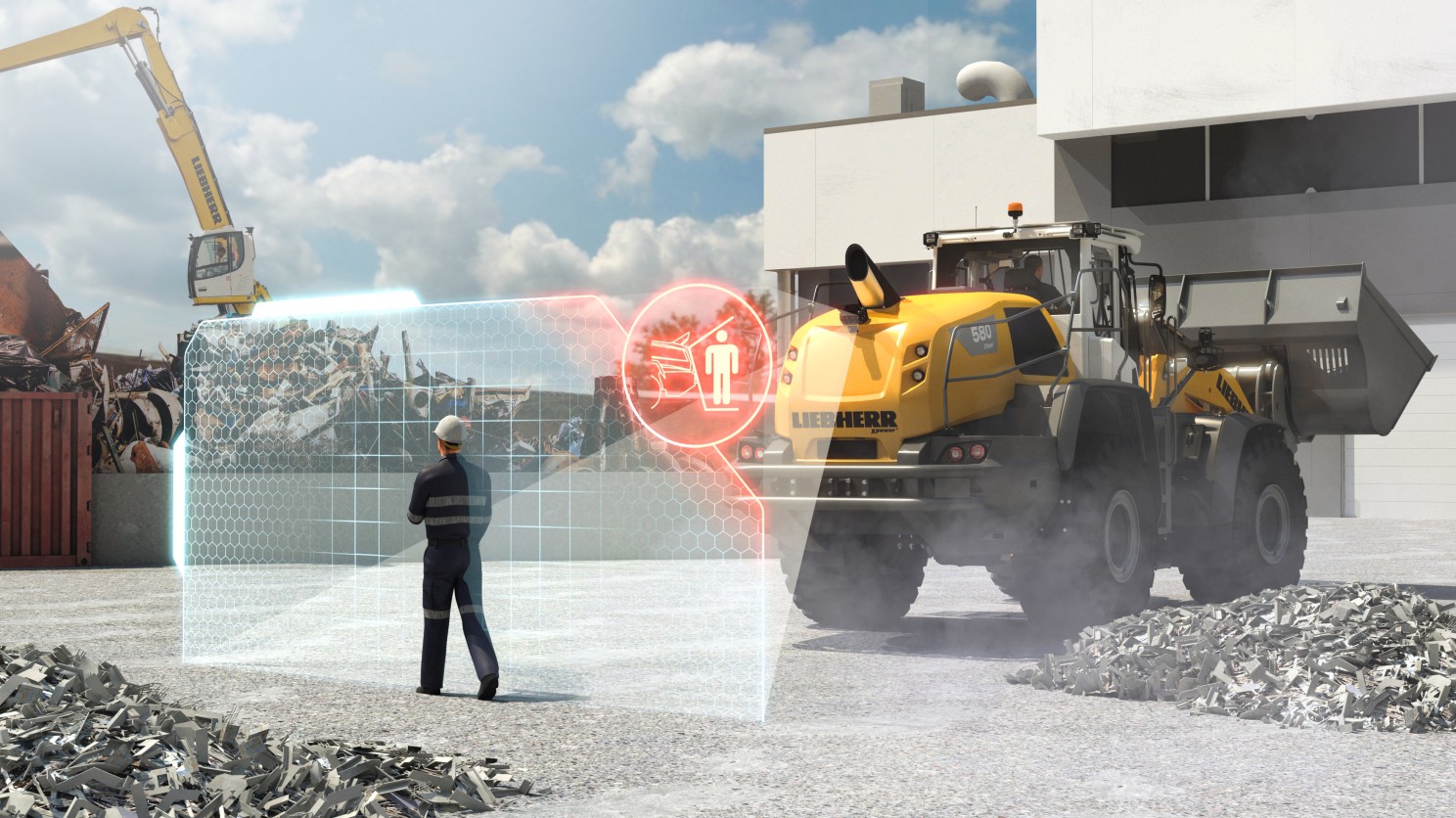
Across wheel loaders, crawler dozers and excavators, assistance systems address concrete operational challenges. SkyView provides a 360-degree view of the machine and its surroundings. This reduces blind spots and improves manoeuvrability in confined spaces.
AI-based person detection adds another safety layer. The system analyses the environment, distinguishes between people and objects, and alerts the operator if someone enters a hazard zone.
‘AI already plays a key role in several systems,’ says Schobesberger. ‘It allows the machine to interpret its surroundings and deliver precise alerts.’ Loading operations are also becoming more efficient. Bucket Fill Assist uses machine learning to analyse and optimise loading cycles.
‘The system improves with every cycle,’ Schobesberger explains. ‘It refines bucket position and movement to increase efficiency and consistency.’ The benefits are immediate: smoother cycles, reduced machine strain and more predictable results.
Connectivity as the foundation
These capabilities depend on a strong digital infrastructure. Connected systems integrate machine data, sensors and operator inputs. The MyLiebherr portal provides access to machine data, service information and operational insights in one place.

Eugen Schobesberger, managing director engineering, Liebherr-EMtec GmbH
‘Customers gain a clear overview of their machines. They can monitor data, plan service and manage digital services centrally, ’ Schobesberger states.
For fleet managers, this improves transparency. For operators, it creates consistent interfaces across machines.
The path to automation
Assistance systems are the starting point for automation. ‘We follow a step-by-step approach,’ says Strobel. ‘It begins with systems that support specific tasks such as visibility, safety warnings or automated functions.’
The next stage is partial automation, particularly for repetitive or hazardous tasks. Full autonomy will follow where it provides clear value. ‘The operator remains essential,’ Strobel emphasises. ‘But the role will shift toward supervision and control.’
Challenges of autonomy
Autonomy in construction presents specific challenges. Jobsites are dynamic environments where machines, people and materials constantly interact. Systems must respond to unpredictable situations.
‘Humans rely on experience and intuition,’ says Schobesberger. ‘Autonomous systems cannot fully replicate that.’ We address this with layered safety systems, including redundant sensors and defined operating limits.
‘No AI system is fully reliable in every situation,’ he adds. ‘Human oversight remains essential.’ Wider adoption will require clear safety frameworks, extensive validation and regulatory standards.
Building the future job site
Current developments in connectivity, sensors and assistance systems are shaping the next generation of construction. Processes will become more data-driven, transparent and predictable.
‘In the future, jobsites will operate more like industrial production systems,’ says Strobel. ‘Machines will share data, workflows will be planned more precisely and operators will be supported by intelligent systems.’
This transition is already underway. What role do you see assistance systems playing on your jobsites today?
Inside the Liebherr-Digital Development Center
At the Liebherr Digital Development Center in Ulm (Germany), interdisciplinary teams develop and refine digital solutions for the construction industry. Software, data and engineering expertise come together to make complex machine technology reliable, transparent and easy to use in real‑world operations.
➡ Discover how digital expertise is shaping connected construction machines. Read the full article: At the beating heart of digitalisation – Liebherr
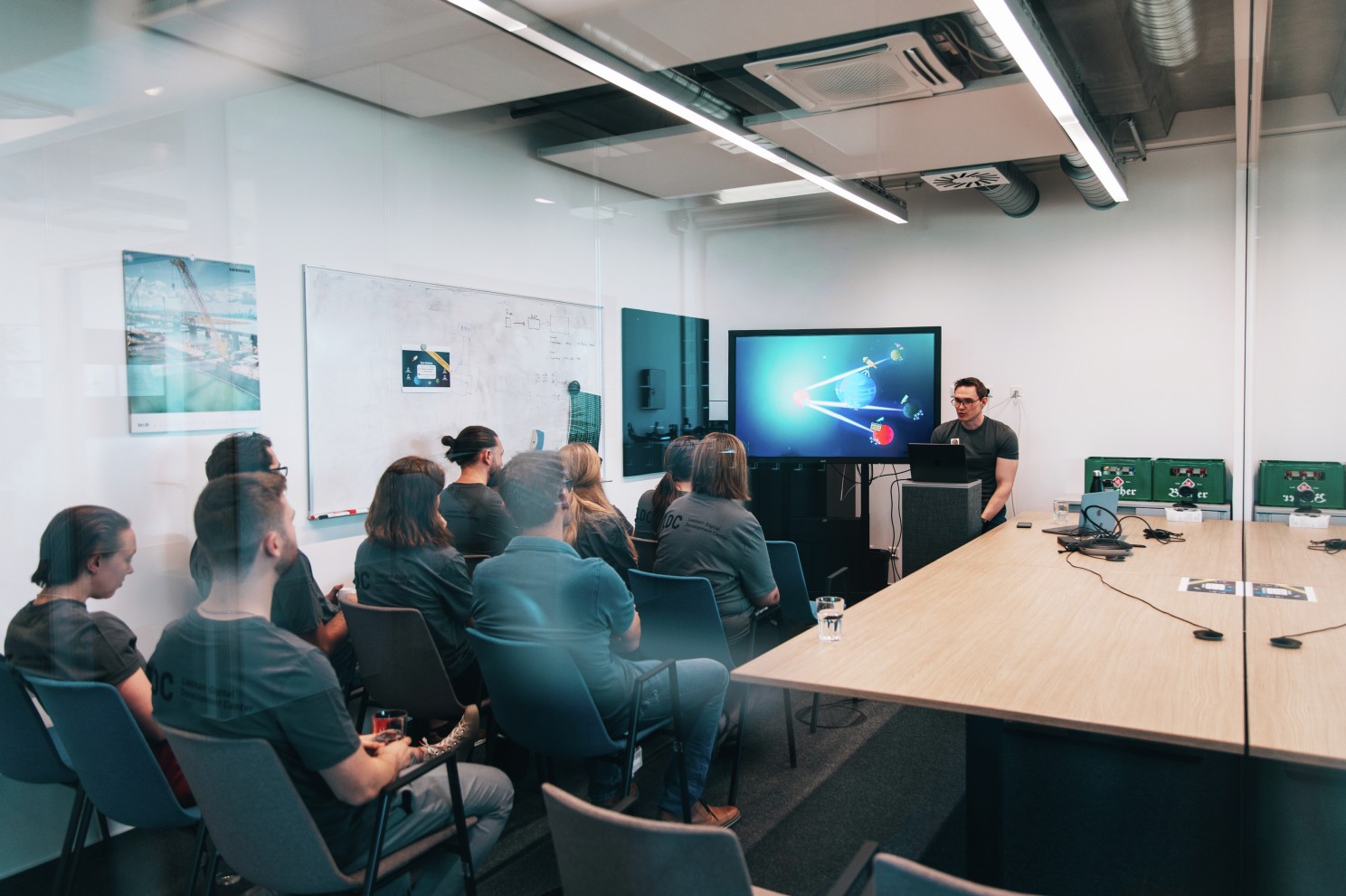
Liebherr Digital Development Center in Ulm (Germany)
Attachments

Related Post


Hitachi Construction Machinery (Europe) and Akkodis...
Hitachi Construction Machinery Europe N.V. (HCME), currently transitioning to the LANDCROS brand, today announced a strategic partnership wi...

Successful commissioning of petcoke silo at...
Following the successful start-up of the Delayed Coker Unit at the Rijeka Refinery in Croatia, we are pleased to announce the successful com...

A new digital experience: Discover the...
We are excited to announce the launch of our brand-new E-Crane website! With a fresh design, improved navigation and a stronger focus on use...

Leave us a comment
logged inYou must be to post a comment.