3D sonar sensors enable unmanned sailing

UAntwerp and Port of Antwerp testing innovative technology for autonomous shipping
‘In 2019, over 42% of all goods entered or left the port of Antwerp via inland waterways’, says port alderman Annick De Ridder. ‘In other words, inland shipping is crucial if we want to ensure the accessibility of our city and our port. By focusing on technology such as unmanned navigation, we want to further increase both the market share and the competitiveness of inland shipping.’
‘Unfortunately, inland shipping is not exactly a sexy sector’, says Svetlana Samsonova. As liaison officer, she coordinates many different joint research projects carried out by the University of Antwerp and the Port of Antwerp. ‘Attracting young talent to this sector is not an easy feat. That’s why we focus so strongly on innovation. Unmanned vessels can lead to substantial cost savings, as well as provide an answer to our increasing traffic congestion problems and the rising costs of road transport. Smart vessels definitely have a part to play in the multimodal transport approach that the Port of Antwerp wants to help develop further.’
Impervious to dust and fog
Enter Prof. Jan Steckel. At CoSys-Lab, a research group in UAntwerp’s Faculty of Applied Engineering, he develops advanced sensor systems that can withstand harsh conditions. ‘In order to achieve fully autonomous navigation, constant monitoring of the ship’s surroundings is absolutely crucial’, Steckel explains. ‘Cameras can be used, of course, but when visibility is poor – due to dust, water sprays, mud, smoke or fog – they don’t work properly.’
Sonar sensors, however, remain fully functional under such circumstances. They can provide a reliable picture of the ship’s surroundings at a low cost. Steckel:
‘We drew our inspiration from the way bats use echolocation. They emit sound waves, and when those waves hit objects, the bats hear the echoes of these collisions, allowing them to avoid obstacles flawlessly.’
Reflected sound waves
CoSys-Lab is a world leader in innovative sonar technology, which has many possible uses. For instance, the researchers are also looking into applications in the mining industry, where trucks equipped with these sensors could drive automatically from point A to point B.
For the project with the Port of Antwerp, the researchers developed a 3D sonar sensor with 32 sophisticated waterproof microphones. The project is called eRTIS, which stands for ’embedded Real Time Imaging Sonar’. Steckel: ‘The information is transmitted in real time, because if there are any delays, the ship could crash into something. The ‘Imaging Sonar’ part refers to reflected sound waves hitting the sensors to create a picture of the surroundings.’
In the last weeks of 2020, the technology was successfully tested on the Tuimelaar, one of the Port of Antwerp’s test vessels. In 2021, there will be a follow-up project: as part of the Smart Docking Innovation Challenge, the Port of Antwerp has given the green light to Prof. Jan Steckel’s 3D Sonar and Lidar for Vessel Monitoring project.


Attachments


Related Post
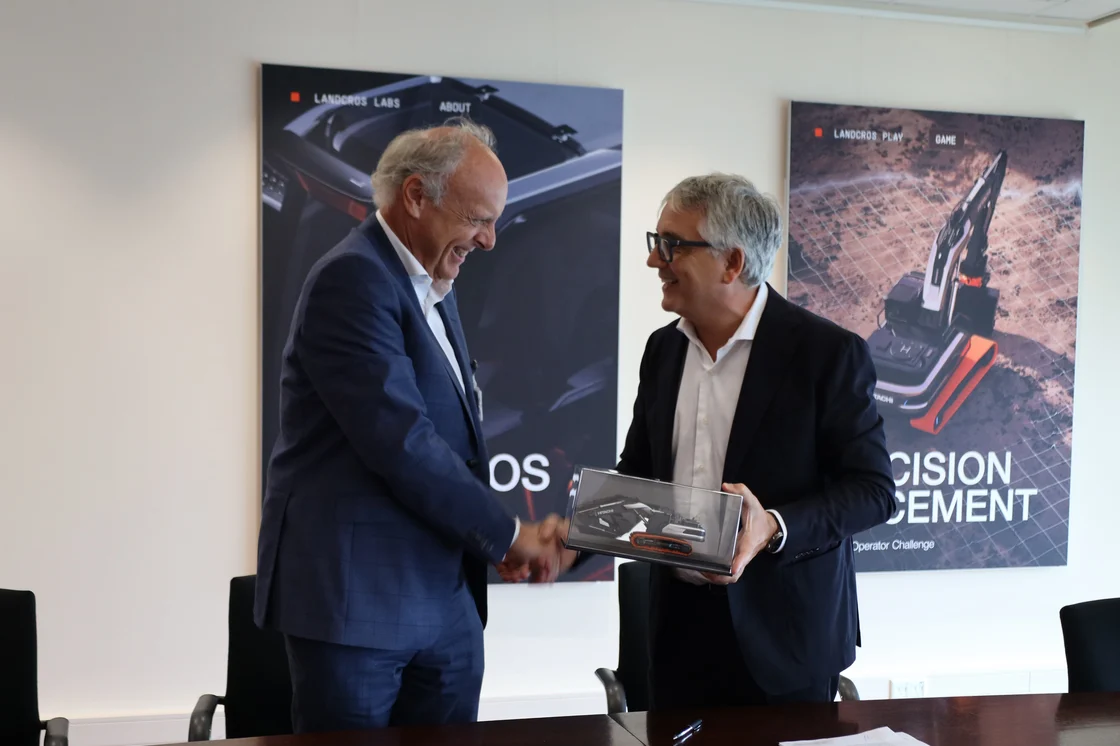

Hitachi Construction Machinery (Europe) and Akkodis...
Hitachi Construction Machinery Europe N.V. (HCME), currently transitioning to the LANDCROS brand, today announced a strategic partnership wi...

Successful commissioning of petcoke silo at...
Following the successful start-up of the Delayed Coker Unit at the Rijeka Refinery in Croatia, we are pleased to announce the successful com...

A new digital experience: Discover the...
We are excited to announce the launch of our brand-new E-Crane website! With a fresh design, improved navigation and a stronger focus on use...

Leave us a comment
logged inYou must be to post a comment.