Passive Dust Control At Conveyor Transfer Points

Most belt conveyors experience some spillage and dust at the transfer point, leading to safety and air quality concerns. Passive dust control is achieved by retrofitting the conveyor transfer point to seal the enclosure and control airflow within it, allowing dust to settle back onto the material stream, rather than using powered air cleaners or HVAC hoods to extract particulates. Although passive methods are not a silver bullet, this engineering control should be the first step toward transfer-point dust suppression, for the long-term ROI with low maintenance and a track record of compliance.
Nearly all global government air quality regulations for bulk handling address respirable crystalline silica (RCS) due to its association with silicosis, pneumoconiosis, and chronic obstructive pulmonary disease (COPD). Raw material handlers are acutely affected by RCS. However, general particle emissions are also harmful, so most bulk handlers, such as recyclers, agricultural operations, ports, and steel producers, greatly benefit from the workplace safety that passive dust control provides.
Have Dust, Will Travel
The skirtboard enclosure is essentially a settling chamber. The basic concept is that a dust particle will settle out of a laminar air stream based on the speed of the air flow, Vair, and the terminal velocity, Vt, of the dust particle. [Fig.1]
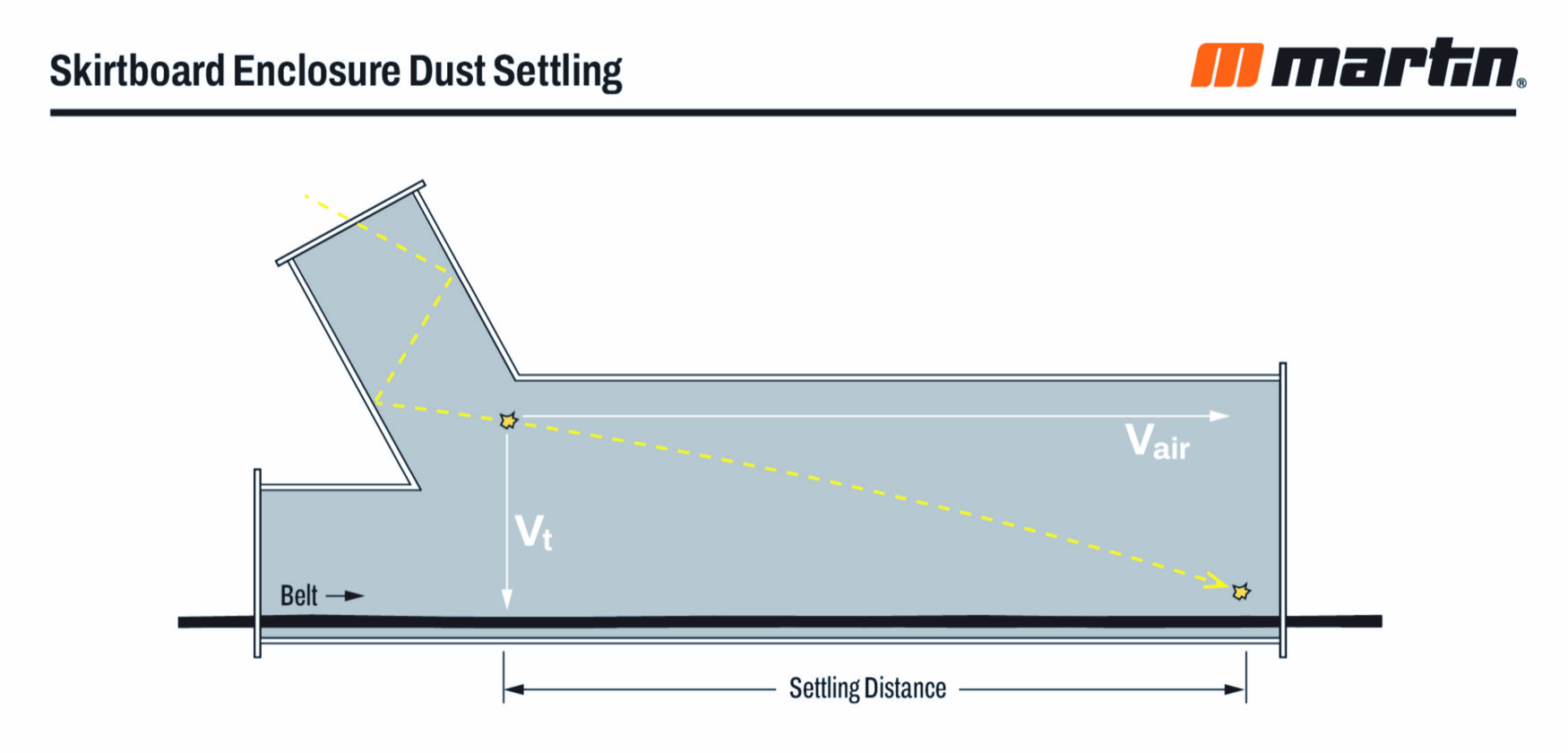
Current practice for conveyor enclosures is to design for Vair ≤1.0 m/s by increasing enclosure height. Two common rules of thumb for the enclosure length are 2 times the belt width or 0.6 m per 1.0 m/s of belt speed. It is interesting to note that if H is increased, the distance (L) that the average dust particle must travel also increases.
Controlling Airflow
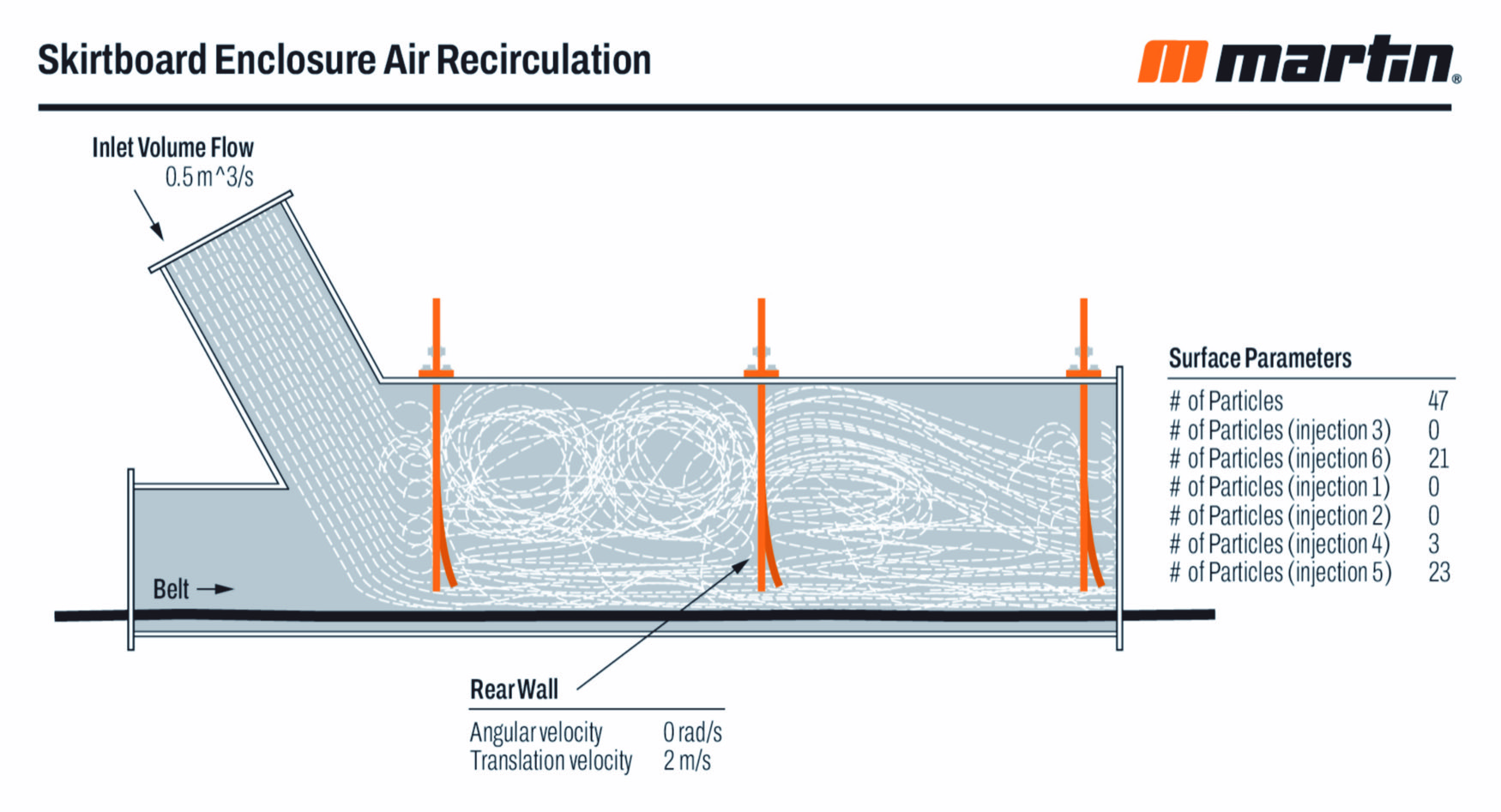
The average air velocity through the skirtboards is directly proportional to the induced airflow and cross-sectional area. Average velocities in the skirtboards due to induced air can range from 0.8 to 2.8 m/s. Belt speed has a minor effect on the average velocities. The maximum air velocities are almost always found where the air flows under the skirtboard curtains.[Fig.2]
Particle Density – Particles of 40 and 100 microns (μm) in size — roughly the size of a human hair — settle quickly. A particle 10 μm or smaller is “respirable,” or able to penetrate the lungs’ natural defenses and cause serious lung diseases. As bulk density increases, respirable dust emissions decrease moderately and must be properly contained.
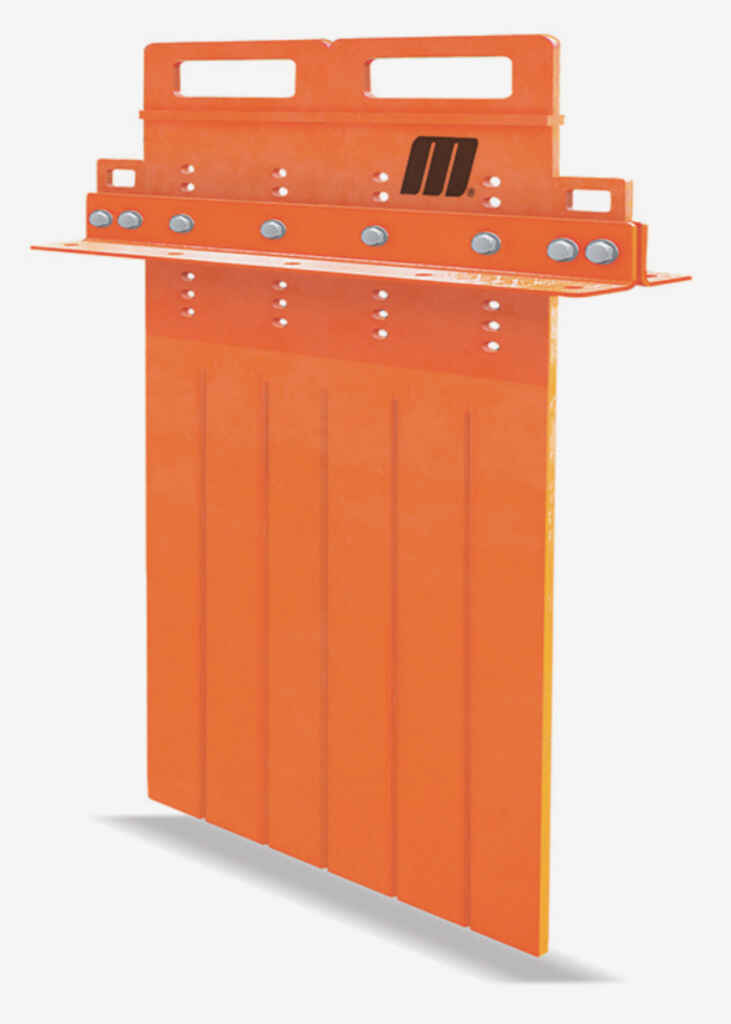
Curtains – The best results are obtained using three or more curtains. Martin® A.I.R. Control™ Dust Curtains create controlled recirculation zones that allow dust particles to agglomerate and settle.[Fig.3]
Loading Chute and Tailbox – The width of the loading chute should be narrower than the skirtboard width. This folds the airflow between the first curtain and the tailbox, encouraging it toward the top of the enclosure rather than along the material’s surface.
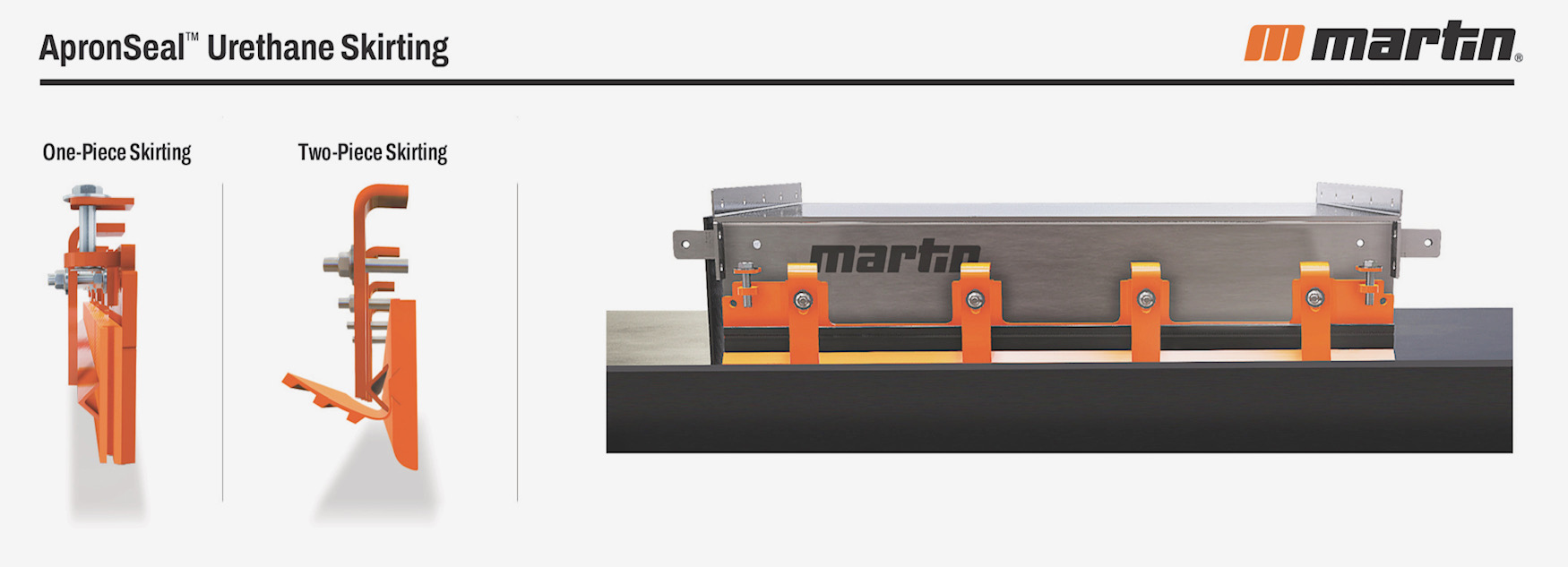
Skirtboard Length – If airflow is under 0,5 cubic meters per second (1000 cubic feet per minute), the length of skirtboard is 0,6m (2 ft) for every 0,5 mp/s (100 fpm)of belt speed. If airflow is greater than 0,5 cmp/s (1000 cfpm), the length of skirtboard is 0,9 m (3 ft) for every 0,5 mp/s (100 fpm) of belt speed. This allows enough room to establish circulation zones and – if properly sealed with skirting like Martin® ApronSeal™ Urethane Skirting – results in passive dust control.[Fig.4]
Skirtboard Height – An enclosure height beyond 600 mm (24 in.) for the standard conveyor with a single exit curtain can reduce nuisance emissions but, space allowing, a taller enclosure increases the average settling path for greater control.
Conclusion
Along with reducing emissions and spillage, passive dust control requires no power and only limited maintenance. By controlling airflow, dustbags can be added for an extra layer of passive particle suppression. Retrofitted equipment decreases cleaning labor, increases system life, improves compliance, and reduces downtime, making a quantifiable case for a short return on investment.
Attachments

Related Post


Ports of Indiana CEO Jody Peacock...
Jody Peacock, CEO of Ports of Indiana, has been named one of the inaugural recipients of the CARGO Award, presented by Inland Rivers, Ports ...

Strengthening Belgian-Bangladeshi Connections
On August 5, E-Crane Bangladesh had the pleasure of welcoming His Excellency Mr. Didier Vanderhasselt, Ambassador of Belgium to Bangladesh ...
Built for Versatility: The Carver Companies’...
Another application for the Carver Company’s 3000 Series E-Crane, Model EC19421 CR-D was an overwhelming success as the dockside craw...

Leave us a comment
logged inYou must be to post a comment.